

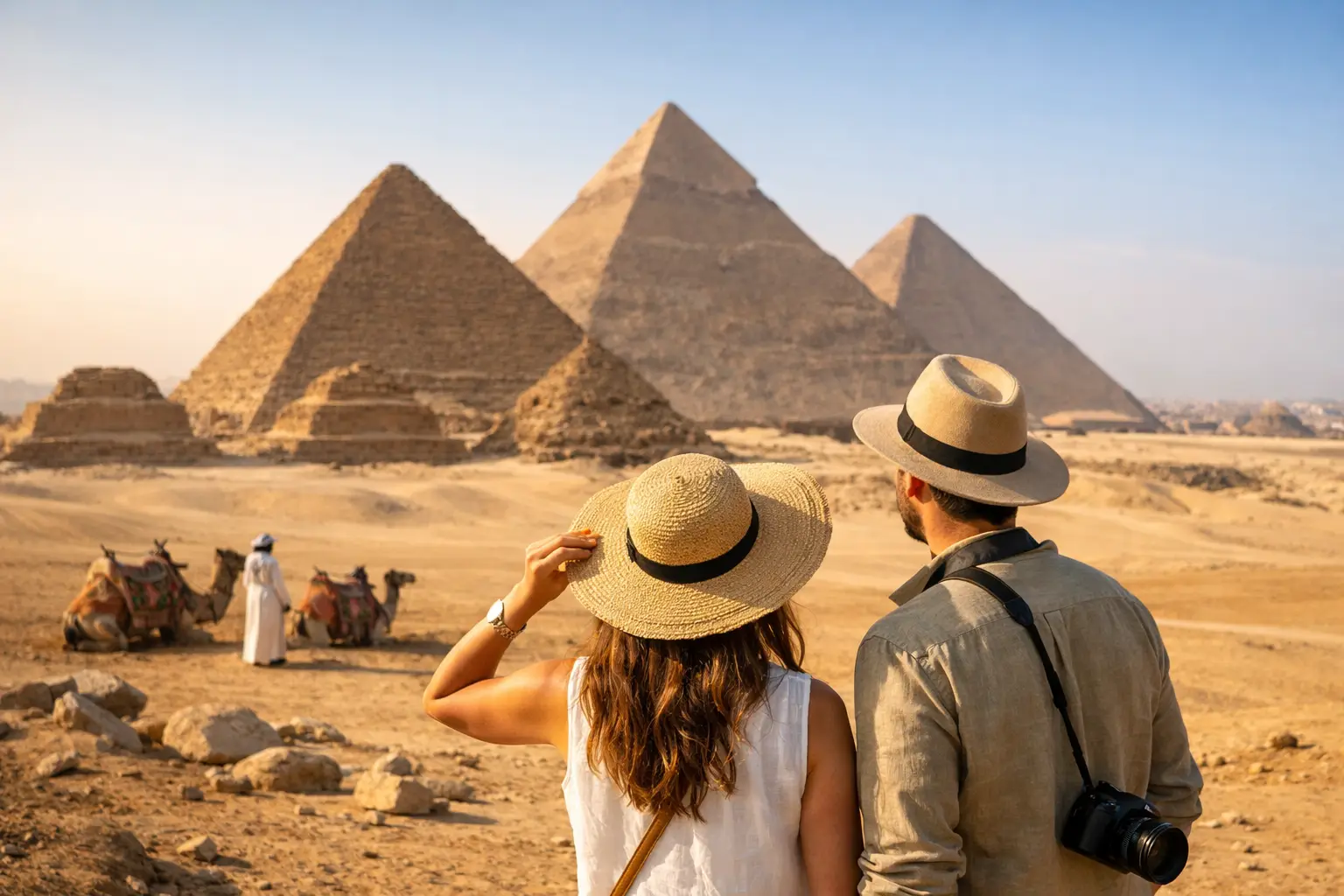
You see the skyline of Giza long before you fully understand its scale. Then suddenly the stones are there in front of you – not as a postcard image, but as one of the world’s great historical landscapes. If you are asking can you tour the pyramids of giza, the simple answer is yes. You can visit the plateau, walk around the main pyramids, enter selected pyramids with the proper ticket, and experience the site far more closely than many first-time travellers expect.
What matters is not only whether you can visit, but how you visit. The Giza Plateau can be straightforward and deeply rewarding with the right planning, especially if you value comfort, timing, and meaningful historical context rather than simply arriving for a few photographs.
Can You Tour the Pyramids of Giza and Go Inside?
Yes, you can tour the Pyramids of Giza, and in many cases you can also go inside one of the pyramids. This is often the detail travellers care about most, because there is a difference between visiting the complex and entering an actual pyramid chamber.
General site entry gives you access to the Giza Plateau itself, where you can see the Great Pyramid of Khufu, the Pyramid of Khafre, the Pyramid of Menkaure, the Great Sphinx, and the surrounding funerary monuments and viewpoints. Entry inside a pyramid is usually a separate ticket and subject to site regulations on the day.
It is worth knowing that going inside is a unique experience, but not always the right choice for every traveller. The internal passages are narrow, steep, and warm. There is very little decorative artwork inside the main Giza pyramids compared with some tombs elsewhere in Egypt. For history lovers, the atmosphere is remarkable. For travellers who are claustrophobic, have mobility concerns, or expect richly painted interiors, the experience may feel more physically demanding than visually rewarding.
What a Giza Pyramids Tour Usually Includes
A well-planned visit is about more than entering through the gate and walking in the sun. Most travellers benefit from a structured tour that combines the key monuments with sensible pacing.
A typical private or small-group visit usually includes time at the panoramic viewpoints, where you can appreciate the alignment of the pyramids across the desert edge. It also includes the Sphinx area, which gives essential context to the royal funerary complex, and often stops near the Valley Temple connected with Khafre. If your schedule allows, many travellers pair Giza with Saqqara, Memphis, or the Grand Egyptian Museum for a fuller understanding of ancient Egypt rather than an isolated monument visit.
This is where expert guidance makes a real difference. At Giza, the site can seem visually simple at first glance – large stone monuments in an open desert setting. In reality, it is layered with architectural, religious, and political meaning. A knowledgeable Egyptologist can explain how the pyramids were planned, why the Sphinx still matters in royal ideology, and what most visitors overlook when they focus only on the famous skyline.
What You Can Actually See at the Site
Many travellers imagine the pyramids as a single stop for a few photographs. In practice, the plateau is a wide archaeological zone with several distinct areas.
The Great Pyramid of Khufu is the centrepiece and remains the only surviving wonder of the ancient world. Khafre’s pyramid, often appearing taller because of its higher ground and preserved casing stones near the summit, is equally impressive in person. Menkaure’s pyramid is smaller but historically important and helps illustrate the development of pyramid building across the dynasty.
Then there is the Sphinx, which tends to feel far more powerful in person than in photographs. Its placement, symbolism, and connection to the funerary landscape are best understood on site. Nearby subsidiary pyramids, mastabas, and temples also add depth for travellers who want more than the standard highlights.
If you enjoy archaeology, the value of a guided visit is not speed but interpretation. The plateau becomes much richer once you understand that this was not a collection of isolated monuments, but a carefully designed sacred and political landscape.
Is It Better to Visit Independently or With a Guide?
Technically, you can visit independently. For some travellers, that is enough. But if this is your first trip to Egypt, or if you prefer a smooth and comfortable day, a professionally organised tour is usually the better choice.
The main advantage is efficiency. Private transport, planned entry timing, and clear guidance remove the guesswork from the day. You avoid wasting energy on logistics and can focus on the experience itself. This matters more than many people realise, especially in warmer months or during a short stay in Cairo.
The second advantage is context. Without explanation, many visitors leave Giza impressed by the size but unclear on the significance. With an Egyptologist guide, the site becomes coherent. You understand what you are seeing, why it was built, and how it connects to the wider story of pharaonic Egypt.
For luxury travellers, couples, families, and guests with limited time, private touring also offers a more relaxed pace. You can spend longer where it interests you, adjust around your comfort level, and avoid the rushed feeling that often comes with large coach-based sightseeing.
Best Time to Tour the Pyramids of Giza
The best time of day is usually early morning. Light is softer, temperatures are more manageable, and the site generally feels more pleasant before the busiest midday period. This is especially helpful if you want to explore properly rather than move quickly from one photo stop to the next.
Season also matters. Egypt can be visited year-round, but the cooler months are often more comfortable for extended site visits. During hotter periods, careful scheduling becomes important. A later start may sound tempting on holiday, but for Giza it often means stronger sun and a more tiring experience.
This is one reason many experienced travel planners build Giza into a broader itinerary rather than treating it casually. Timing shapes the quality of the visit.
Practical Points Before You Go
If you are wondering whether the site is suitable for everyone, the honest answer is that it depends on your travel style and physical comfort. The plateau is large, sunny, and exposed. Walking is part of the experience, even when transport is arranged efficiently.
Comfortable footwear, sun protection, water, and realistic expectations all help. If you plan to enter a pyramid, be prepared for enclosed passageways and a climb that can feel strenuous. Families with children often enjoy the open drama of the site, though younger travellers may engage more with shorter, well-paced visits than long historical explanations.
Photography is one of the highlights, but the best visits do not revolve around photographs alone. The scale of the site rewards patience. A few well-chosen stops with expert commentary are often more memorable than trying to cover every corner too quickly.
Can You Tour the Pyramids of Giza on a Day Trip?
Absolutely. For many international visitors, Giza is an easy and rewarding day trip, especially if you are staying in Cairo. It can also be combined with other major sites depending on your pace and interests.
That said, not every day trip should be packed too tightly. Some travellers prefer to combine Giza with the Sphinx and Grand Egyptian Museum. Others want a broader ancient Egypt day that includes Saqqara and Memphis. The right combination depends on whether you prefer a focused experience or a more comprehensive historical route.
For travellers staying at Red Sea resorts or elsewhere in Egypt, a day trip is sometimes possible but requires tighter planning. In these cases, private service becomes especially valuable because it keeps the day efficient and comfortable.
The Experience Is Better When It Is Properly Organised
The Pyramids of Giza are not difficult to visit, but they are too important to treat casually. A professionally arranged tour gives you more than transport and tickets. It gives structure, clarity, and the kind of informed guidance that turns a famous landmark into a genuine cultural experience.
For travellers who want comfort, reliable planning, and expert interpretation, this is where a specialist Egypt travel company can add real value. BAS Tours Global Travel Inc., for example, focuses on private and tailor-made Egypt journeys designed for international guests who want the visit to feel smooth from start to finish.
The right way to see Giza is not necessarily the fastest or the cheapest. It is the one that lets you stand in front of these monuments with enough time, context, and comfort to appreciate what they really are – not just icons of Egypt, but one of humanity’s most extraordinary achievements.
If Giza is on your itinerary, treat it as a highlight worthy of proper planning, and it will reward you with far more than a tick on a travel list.


